One Robotics Supply Group

INDUSTRIES / LOGISTICS

Robotics for Logistics

Modern logistics depends on efficient handoffs between docks, distribution facilities, staging areas, transportation networks, and the people and systems that keep freight moving.

One Robotics Supply Group is building relationships and commercial infrastructure across the robotics ecosystem to help organizations evaluate, source, deploy, and support emerging robotic technologies.
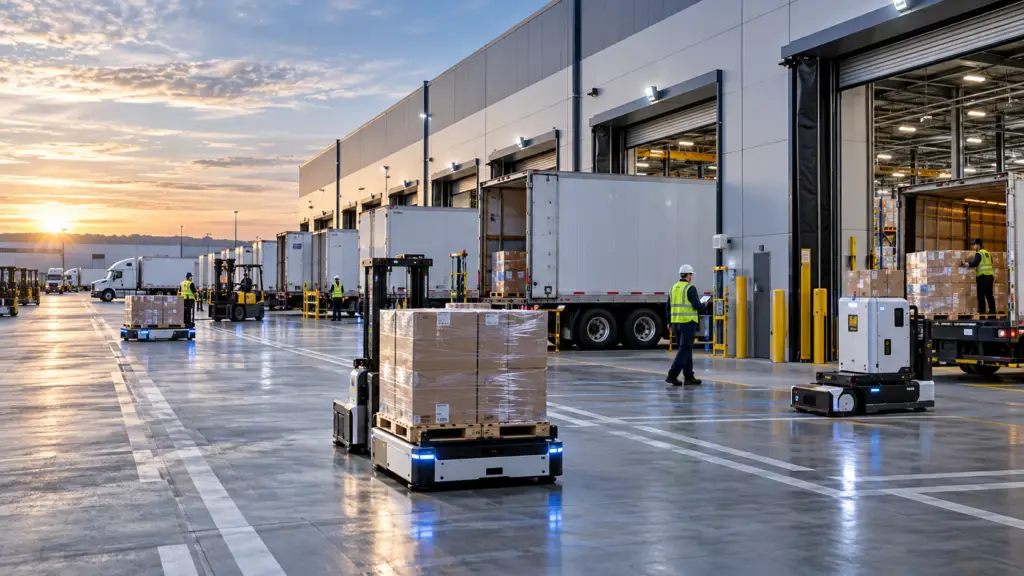

Commercial robotics operating in a modern logistics environment

LOGISTICS AUTOMATION

Robotics can connect more of the physical logistics chain.

Logistics operations depend on coordinated movement across docks, terminals, distribution centers, yards, staging areas, and transportation networks. Many of those handoffs still include repetitive physical work and time-sensitive material movement.

Robotics may support selected parts of the chain by moving goods, inspecting assets, assisting with loading and unloading, supporting sortation, and connecting process areas that are difficult to automate with fixed equipment alone.

The challenge is not simply adding robots. Logistics deployments must account for changing freight profiles, variable demand, mixed indoor and outdoor environments, system interoperability, safety, uptime, service coverage, and the cost of delays when automation is unavailable.

LOGISTICS APPLICATIONS

Where robotics may support logistics operations.

Freight & Pallet Movement

Robotic platforms may support movement of pallets, carts, freight, and containers between receiving, staging, cross-dock, and outbound areas.

Loading & Unloading Support

Emerging mobile and manipulation systems may assist with selected trailer, container, dock, and transfer workflows.

Sortation & Consolidation

Robotics may support routing, staging, and consolidation of packages or freight when integrated with scanning and logistics software.

Yard & Asset Inspection

Autonomous inspection systems may help monitor trailers, containers, equipment, perimeter areas, or infrastructure.

Cross-Dock Operations

Mobile robots may help connect inbound and outbound flows where goods move rapidly through a facility rather than into long-term storage.

Last-Meter Internal Movement

Robotic systems may reduce manual transport between docks, work cells, packing areas, and dispatch zones.

THE TECHNOLOGY SHIFT

Automation is moving from isolated equipment toward connected physical workflows.

Logistics automation has traditionally concentrated on high-volume equipment inside controlled facilities. New mobile systems can extend automation into the gaps between fixed systems and process areas.

Autonomous robots may travel through shared operational spaces, adapt to changing routes, and connect receiving, sortation, storage, staging, and dispatch workflows without requiring every path to be rebuilt around conveyors.

Future humanoid or advanced manipulation platforms may broaden the range of tasks that can be addressed, especially where freight, tools, controls, and work areas are designed for people. Real-world value will depend on reliability, cycle time, exception handling, and integration across the operation.

COMMERCIAL REQUIREMENTS

Successful robotics adoption requires more than hardware.

01

Sourcing & Procurement

Identify suitable manufacturers, platforms, equipment, and supporting technologies for the specific operating environment and workflow.

02

Parts & Components

Plan for batteries, chargers, accessories, sensors, replacement components, tooling, and other equipment required over the system lifecycle.

03

Integration & Deployment

Evaluate how robotics will interact with facilities, software, people, workflows, controls, and existing equipment.

04

Research & Intelligence

Understand manufacturers, capabilities, market maturity, deployment evidence, and technology development before committing to a platform.

05

Financing & Commercial Models

Evaluate purchasing, leasing, financing, robotics-as-a-service, or other commercial structures where appropriate.

06

Lifecycle Support

Plan for training, maintenance, software updates, spare parts, field service, warranty, and long-term equipment availability.

EMERGING HUMANOID SYSTEMS

Humanoid systems may be relevant where logistics infrastructure was built for people.

Docks, trailers, carts, containers, doors, hand tools, and staging areas often assume human movement and dexterity. A general-purpose humanoid form could eventually allow some robotic systems to interact with those environments without complete facility redesign.

Potential logistics applications may include selected loading tasks, parcel or tote handling, inspection, staging, equipment checks, and movement between process areas.

Because logistics is highly time-sensitive, buyers should evaluate sustained cycle performance, error recovery, payload, runtime, environmental tolerance, network dependence, service response, and the operational consequences of downtime.

Explore Humanoid Robotics

EVALUATING ROBOTICS

Questions logistics decision-makers should answer before deployment.

01

Which handoff or movement task currently creates the greatest delay, labor burden, or safety exposure?

02

How variable are the freight dimensions, weights, packaging, and handling requirements?

03

Does the robot need to operate indoors, outdoors, on docks, or across mixed surfaces?

04

What payload, reach, mobility, sensing, or manipulation capability is required?

05

How will the system integrate with TMS, WMS, scanners, controls, and existing automation?

06

What cycle time and throughput are required during peak operations?

07

How will people, forklifts, trucks, and robots safely share operating areas?

08

What maintenance, charging, spare-parts, and field-service coverage is available?

09

How are exceptions, damaged freight, blocked routes, or irregular loads handled?

10

What is the total economic impact if the system is unavailable during a critical window?

RELATED RESEARCH

Research for distribution and internal logistics decisions.

For distribution operations, Humanoid Robotics Reports’ Warehousing and Distribution Robotics report examines transport workflows, queues, fleet coordination and system handoffs. Use it to structure evaluation questions for these logistics applications.

Explore Distribution Research

ONE ROBOTICS SUPPLY GROUP

Building commercial infrastructure for the robotics economy.

One Robotics Supply Group is developing specialized businesses, relationships, and resources across the commercial robotics ecosystem.

For logistics organizations, that means looking beyond an individual robot toward sourcing, supporting technologies, integration relationships, deployment planning, research, and long-term equipment support.

SOURCE

Robotics manufacturers, platforms, equipment, and supplier relationships.

Two professionals discussing a robotics component with humanoid and industrial robots in the background.

EQUIP

Parts, accessories, components, and supporting technologies.

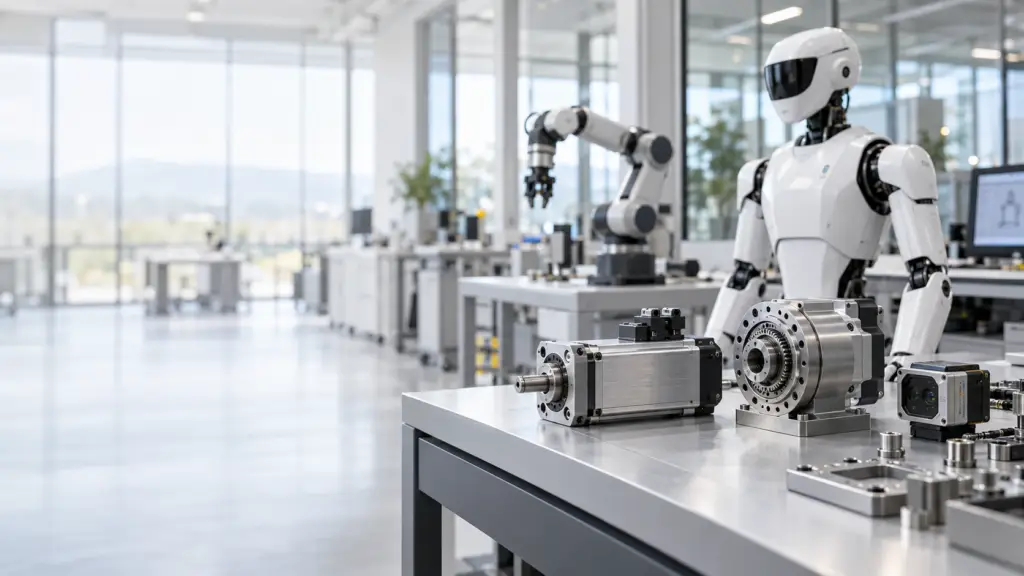
Precision robotics components on a workbench with a humanoid robot and industrial robotic arm in a bright facility.

DEPLOY

Integration relationships, deployment planning, and operational considerations.

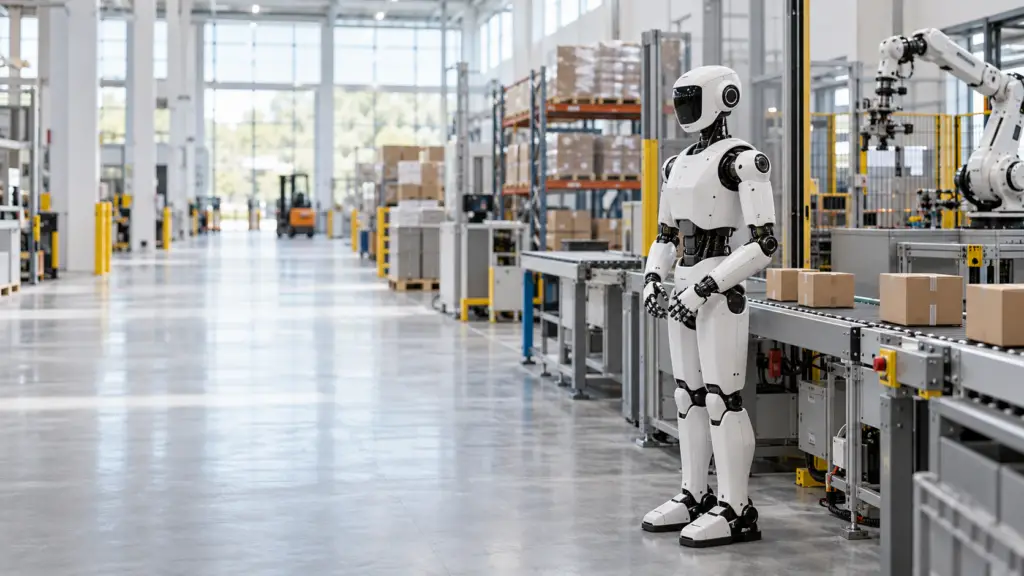
Humanoid robot beside a conveyor with packaged goods and an industrial robotic arm in a bright warehouse.

UNDERSTAND

Research, market intelligence, and emerging industry developments.

Humanoid robot beside a precision actuator and laptop in a bright robotics showroom.
Explore What We Do

EXPLORE MORE INDUSTRIES

Robotics across commercial environments.

START A CONVERSATION

Exploring robotics across your logistics operation?

Whether you are evaluating freight movement, dock automation, autonomous inspection, emerging humanoid systems, or the commercial infrastructure behind deployment, One Robotics Supply Group welcomes conversations with logistics operators, suppliers, and technology partners.