One Robotics Supply Group

APPLICATIONS / MATERIAL HANDLING

Material Handling Robotics

Moving materials is one of the most common operational challenges across manufacturing, warehousing, logistics, construction, agriculture, healthcare, and other commercial environments.

Material handling robotics may support repetitive movement of pallets, totes, containers, components, supplies, and work-in-progress inventory while reducing the amount of manual transportation required within selected workflows.

One Robotics Supply Group is developing relationships and commercial infrastructure across the robotics ecosystem to help organizations evaluate sourcing, deployment, components, integration, and long-term support around practical robotics applications.
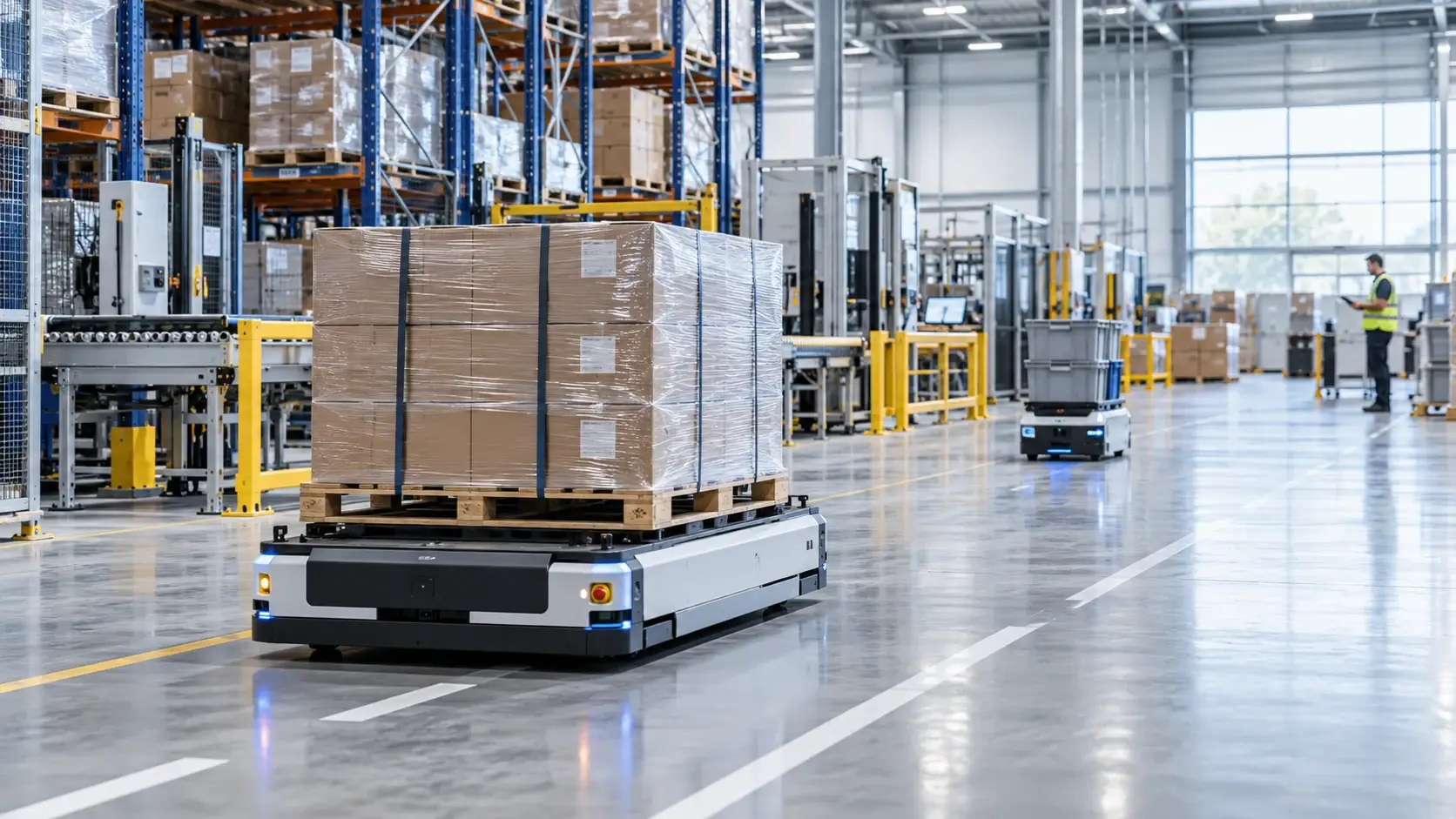

Material handling robotics moving pallets and materials through a modern commercial facility

THE APPLICATION

Moving materials is simple in concept, but complex in practice.

Material movement connects nearly every part of an operation.

Components need to reach production equipment. Finished goods need to move toward packaging or shipping. Pallets, totes, tools, supplies, and work-in-progress inventory may travel repeatedly between defined locations throughout the day.

These workflows are often repetitive, but they can involve changing traffic conditions, people, equipment, narrow spaces, variable loads, and different pickup or delivery requirements.

Robotics can be useful when the movement task is clearly defined and the operating environment can support consistent navigation, loading, unloading, and exception handling.

HOW IT WORKS

A material handling workflow usually involves more than moving from Point A to Point B.

01 →

Identify the Load

The system must recognize or receive information about the pallet, tote, container, component, or material that needs to move.

02 →

Pickup

The robotic system must safely engage, lift, tow, receive, or otherwise secure the load.

03 →

Navigate

The system travels through the operating environment while accounting for routes, people, equipment, obstacles, and traffic rules.

04 →

Deliver

The material must arrive at the correct workstation, storage location, staging area, machine, or shipping zone.

05

Confirm & Continue

The system may confirm delivery, receive its next task, recharge, or return to another pickup location.

COMMON WORKFLOWS

Where organizations may evaluate material handling robotics.

WORKFLOW 01

Pallet Movement

Moving palletized materials between storage, production, staging, and shipping areas.

WORKFLOW 02

Tote & Bin Transport

Transporting totes, bins, containers, and smaller loads between operational zones.

WORKFLOW 03

Production Line Replenishment

Delivering components, materials, or supplies to manufacturing and assembly areas.

WORKFLOW 04

Work-in-Progress Movement

Moving partially completed products between stages of production or inspection.

WORKFLOW 05

Finished Goods Transport

Moving completed products toward packaging, storage, staging, or outbound logistics.

WORKFLOW 06

Supply & Tool Delivery

Transporting tools, supplies, equipment, or consumables to workers and operating areas.

ROBOTIC SYSTEMS

Different material handling workflows may require different robotic platforms.

Autonomous Mobile Robots

May transport carts, totes, containers, or other loads through defined indoor environments.

Autonomous Forklifts & Pallet Movers

May support pallet movement, pickup, staging, and transport workflows.

Mobile Manipulators

Combine mobility with robotic arms or manipulation systems for workflows requiring both transportation and interaction with objects.

Humanoid Robots

Emerging humanoid systems may eventually support material movement in facilities and workflows designed around human movement and handling.

The appropriate platform depends on load type, payload, distance, environment, integration requirements, safety, reliability, and economics.

APPLICATION SUITABILITY

Not every material movement task should be automated.

Good Candidate Characteristics

  • Repeated routes
  • Predictable pickup and delivery points
  • Consistent load types
  • Frequent movement throughout the day
  • Structured indoor environments
  • Clear operational rules
  • Defined traffic patterns
  • Measurable workflow volume

More Complex Conditions

  • Highly irregular loads
  • Constantly changing environments
  • Uncontrolled outdoor terrain
  • Difficult pickup interfaces
  • Frequent unplanned exceptions
  • Heavy interaction with unpredictable traffic
  • Limited system integration
  • Unclear ownership of the workflow

The goal should be to identify where robotics fits naturally into the operation rather than forcing automation into a workflow that is poorly suited to it.

BEYOND THE ROBOT

Material handling robotics depends on the surrounding operation.

Robot specifications are only one part of the deployment.

Successful material handling systems may depend on facility layout, traffic management, load interfaces, charging, software connectivity, fleet management, safety procedures, employee workflows, maintenance, and operational support.

01

Facility Layout

Routes, aisle widths, doors, ramps, floor conditions, intersections, and operating zones.

02

Load Interface

How pallets, carts, totes, containers, or other materials are picked up and delivered.

03

Navigation & Traffic

How robotic systems operate around workers, forklifts, equipment, and other robots.

04

Systems Integration

Connections with warehouse, manufacturing, inventory, fleet, or task-management systems.

05

Charging & Uptime

Battery capacity, charging strategy, fleet availability, and operating schedules.

06

Maintenance & Support

Service, replacement parts, technical support, and long-term system availability.

EMERGING SYSTEMS

Humanoid robots may expand material handling into human-designed workflows.

Much of the built environment was designed around the human body.

Doors, carts, shelving, workstations, containers, tools, and pathways frequently assume human reach, mobility, and manipulation.

Humanoid robots may eventually provide another approach to material handling where organizations want automation to operate within these existing environments without completely redesigning the workflow.

Potential applications could include moving containers, transporting smaller materials, retrieving supplies, carrying components, or supporting material flow between work areas.

The technology remains an emerging category.

Organizations evaluating humanoid systems should examine real-world payload, runtime, stability, manipulation capability, navigation, reliability, safety, service availability, and total cost of ownership.

BEFORE DEPLOYMENT

Questions to answer before selecting a material handling system.

01

What material needs to move?

02

How heavy and large is the load?

03

Where does it originate?

04

Where does it need to go?

05

How frequently does the movement occur?

06

What obstacles or traffic exist along the route?

07

How will pickup and delivery work?

08

What systems need to communicate with the robot?

09

What uptime is required?

10

What maintenance and support are available?

11

How will exceptions be handled?

12

What is the expected total cost of ownership?

ACROSS INDUSTRIES

Material handling appears across nearly every commercial environment.

Manufacturing

Moving components, materials, and work-in-progress inventory.

Explore Manufacturing

Warehousing

Moving pallets, totes, inventory, and orders throughout fulfillment environments.

Explore Warehousing

Logistics

Supporting movement through distribution, staging, and freight operations.

Explore Logistics

Construction

Transporting tools, materials, and supplies across selected jobsites.

Explore Construction

Agriculture

Moving harvested products, supplies, containers, and materials.

Explore Agriculture

Healthcare

Supporting internal movement of supplies, equipment, linens, and selected materials.

Explore Healthcare
Explore Industries

ONE ROBOTICS SUPPLY GROUP

Building commercial infrastructure for the robotics economy.

One Robotics Supply Group is developing specialized businesses, relationships, and resources across the commercial robotics ecosystem.

Our focus extends beyond individual robotic platforms to the broader infrastructure organizations may need to evaluate, source, deploy, and support robotics over time.

SOURCE

Robotics manufacturers, platforms, equipment, and supplier relationships.

Two professionals discussing a robotics component with humanoid and industrial robots in the background.

EQUIP

Parts, accessories, components, and supporting technologies.

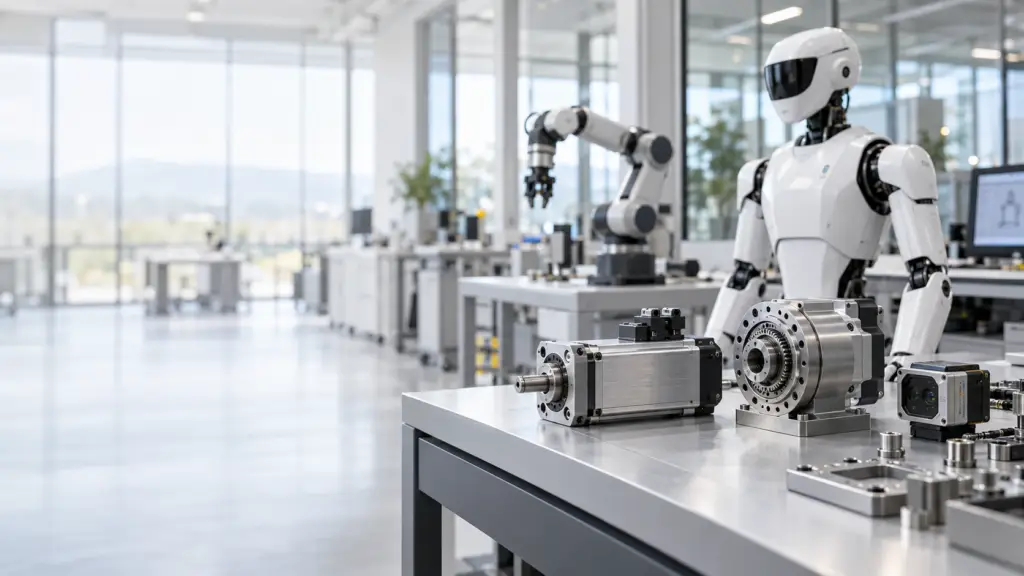
Precision robotics components on a workbench with a humanoid robot and industrial robotic arm in a bright facility.

DEPLOY

Integration relationships, deployment planning, and operational considerations.

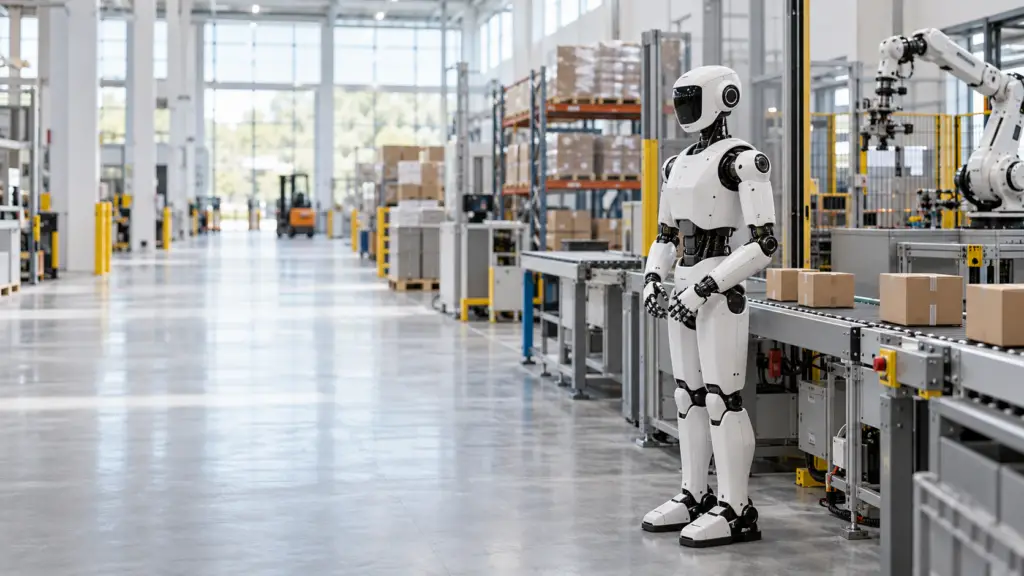
Humanoid robot beside a conveyor with packaged goods and an industrial robotic arm in a bright warehouse.

UNDERSTAND

Research, market intelligence, and emerging industry developments.

Humanoid robot beside a precision actuator and laptop in a bright robotics showroom.
Explore What We Do

START A CONVERSATION

Evaluating material handling robotics for your operation?

Whether you are defining a workflow, researching available systems, comparing robotics platforms, exploring sourcing opportunities, or planning a future deployment, One Robotics Supply Group welcomes conversations with organizations preparing for commercial robotics adoption.