One Robotics Supply Group

HOME / CAPABILITIES / PARTS & COMPONENTS / Robotics Electronics

Robotics Electronics

Robotics electronics connect sensing, computing, communication, power and motion into a functioning machine. Embedded controllers, interface boards, power electronics and communication hardware distribute commands and data across the robot while operating within tight limits on size, reliability and energy use.

One Robotics Supply Group is developing commercial capabilities to help organizations evaluate robotics electronics requirements, sourcing options and integration considerations for commercial systems.

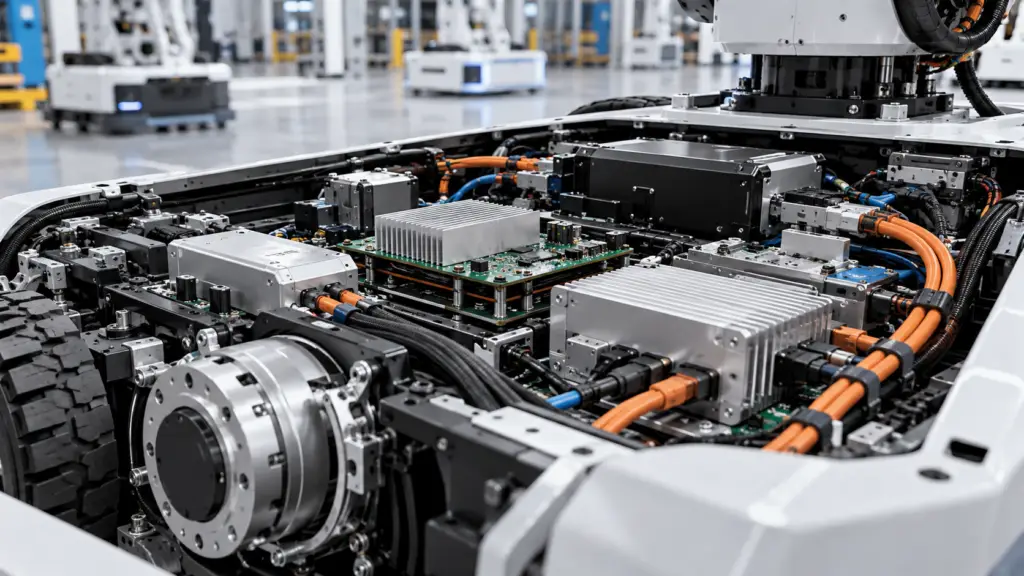
Embedded robotics electronics and control hardware

UNDERSTANDING ROBOTICS ELECTRONICS

What Are Robotics Electronics?

Robotics electronics include the embedded hardware that powers, controls and connects the robot's subsystems. This can range from small interface boards and microcontrollers to motor-control electronics, communication modules, power converters and distributed control hardware located throughout the machine.

The electronics architecture must support real-time control, sensor data, networking and power management while surviving the electrical and physical environment of the robot. Good component selection also considers serviceability, connector reliability, electromagnetic compatibility, thermal performance and the ability to source replacement hardware over the product lifecycle.

ELECTRONICS ARCHITECTURE

Core Electronics in Modern Robots

Embedded controllers

Microcontrollers and embedded processors handle low-level control, sensor acquisition, local logic and communications close to the hardware.

Motor-control electronics

Motor drives and power stages regulate the current delivered to actuators and motors based on commands and feedback.

Communication hardware

Ethernet, fieldbus, serial and other interfaces move commands, telemetry and sensor data between distributed subsystems.

Power electronics

Converters, regulators, protection and distribution hardware create and manage the voltage rails required by different components.

Interface and I/O boards

I/O hardware connects sensors, switches, safety devices and peripheral equipment to the robot control architecture.

PRACTICAL EVALUATION

Key Robotics Electronics Selection Factors

Processing and I/O requirements

The electronics should provide enough compute, interfaces and channels for the sensors, actuators and peripherals they must manage.

Real-time behavior

Low-level control can require predictable timing and communication rather than only high average processing performance.

Electrical compatibility

Voltage levels, current capacity, isolation, grounding and connector standards must match the surrounding hardware.

Thermal design

Electronics generate heat, especially motor drives and computing modules. Packaging must support reliable operation across the expected duty cycle.

Communications

Bandwidth, topology, synchronization and protocol support should match the robot's control and data architecture.

Reliability and serviceability

Rugged connectors, diagnostics, replacement availability and modular design can reduce downtime during commercial operation.

ROBOTICS APPLICATIONS

Where Robotics Electronics Fit in Robotics

Robotics electronics are used throughout industrial arms, mobile robots, humanoids, inspection platforms, grippers and automated equipment. Distributed electronics can place sensing and control close to joints or subsystems, while central computers coordinate higher-level behavior. The architecture chosen affects wiring complexity, latency, thermal management and maintenance.

SOURCING & PROCUREMENT

Sourcing and Procurement for Robotics Electronics

Electronics sourcing should account for electrical specifications, interfaces, physical format, environmental requirements and production lifecycle. Buyers may need to evaluate component availability, lead times, revision control, connector ecosystems, firmware support and long-term replacement strategy. As its capabilities develop, ORSG welcomes discussions about how it may help organizations structure these requirements and evaluate electronics within a broader robotics component procurement plan.

Discuss Your Requirements

FROM COMPONENT TO SYSTEM

Integration and Lifecycle Considerations

Electronics integration includes power distribution, grounding, network architecture, firmware, connectors, cable routing, electromagnetic compatibility and system diagnostics. A board that performs well on a bench may behave differently once installed near motors, batteries and high-current wiring. Commercial deployments should validate thermal, electrical and communication performance under representative operating conditions.

WHO THIS IS FOR

Who This Page Is For

This page is intended for robot manufacturers, OEMs, systems integrators, engineering organizations, industrial automation teams, procurement professionals and companies evaluating or deploying advanced robotic systems.

FREQUENTLY ASKED QUESTIONS

Frequently Asked Questions About Robotics Electronics

What electronics are used in robots?

Robots use embedded controllers, motor drives, power electronics, communication hardware, interface boards, sensors and computing modules to control and connect their subsystems.

What is an embedded controller in robotics?

An embedded controller is a computing device located within the robot that handles tasks such as sensor acquisition, low-level control, local logic and communication.

Why are motor drives part of robotics electronics?

Motor drives regulate electrical power to motors and use control commands and feedback to manage torque, speed or position.

Why does real-time communication matter in robot electronics?

Predictable timing helps distributed controllers, drives and sensors coordinate movement and respond consistently to events and faults.

What should buyers consider when sourcing robotics electronics?

Key considerations include processing, I/O, voltage, current, communications, thermal design, environmental conditions, lifecycle availability and firmware support.

Can ORSG support robotics electronics sourcing?

As its capabilities develop, ORSG welcomes discussions about how it may support organizations evaluating robotics electronics by helping organize requirements, assess sourcing options and connect hardware decisions with integration and lifecycle needs.

START A CONVERSATION

Building the Electronics Architecture for a Robot?

Share your technical, sourcing and deployment requirements. One Robotics Supply Group welcomes conversations as we develop commercial relationships and capabilities across the robotics ecosystem.