
One Robotics Supply Group

APPLICATIONS / WORKFORCE SUPPORT

Workforce Support Robotics

Not every robotics deployment is about replacing an entire job or process. Many applications are better understood as workforce support, where robots handle selected repetitive, physically demanding, transport, monitoring, or positioning tasks while people remain responsible for judgment, coordination, quality, and exceptions.

One Robotics Supply Group is developing relationships and commercial infrastructure across the robotics ecosystem to help organizations evaluate sourcing, deployment, components, integration, and long-term support around practical robotics applications.
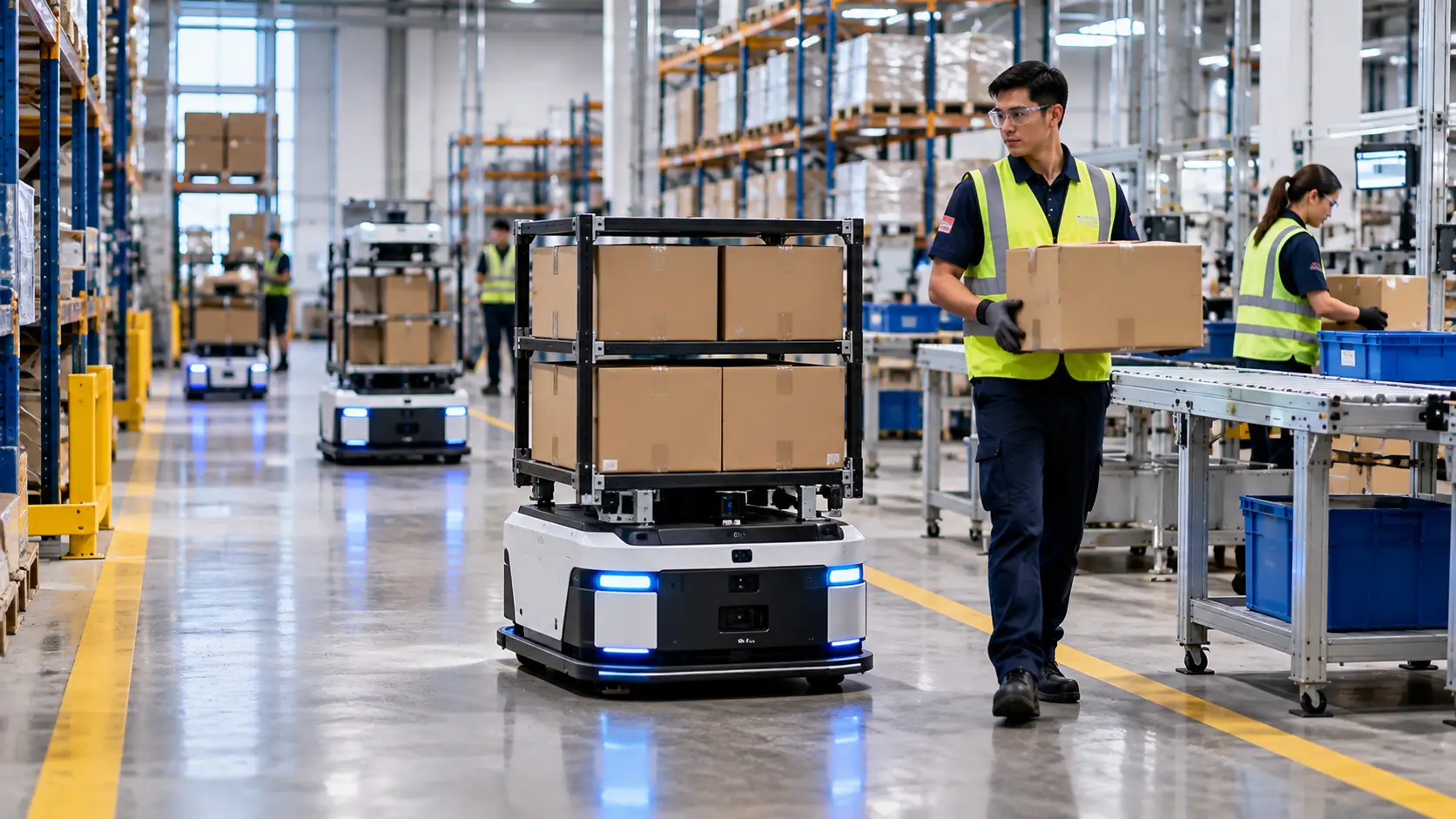

Workforce support robot assisting workers with material handling in a modern industrial facility, demonstrating human-robot collaboration and workforce automation robotics.

APPLICATION OVERVIEW

Where workforce support robotics can create operational value.

Identify the specific task a robot could take on and the responsibilities that remain with workers. Clear handoffs, safe interaction and practical exception procedures help organizations evaluate whether the system supports the people doing the work.

COMMON WORKFLOWS

How organizations may use workforce support robotics.

WORKFLOW 01

Repetitive Transport

Robots may move materials, tools, carts, supplies, or inventory so workers spend less time on routine transport.

WORKFLOW 02

Ergonomic Assistance

Robotic systems may support repetitive lifting, holding, positioning, or reaching tasks in suitable environments.

WORKFLOW 03

Collaborative Workstations

Collaborative robots may handle defined portions of a process while employees perform tasks requiring judgment or adaptability.

WORKFLOW 04

Inspection Assistance

Robots may gather images, measurements, or routine observations for technicians and operators to review.

WORKFLOW 05

Supply Delivery

Service and mobile robots may deliver parts, linens, tools, consumables, or other supplies within facilities.

WORKFLOW 06

Task Handoffs

More advanced systems may eventually support workflows where robots and people pass materials, tools, or work-in-progress between defined steps.

DEPLOYMENT

The application needs to work inside the real operation.

Workforce-support robotics should be designed around people. Safety, training, ergonomics, clear task ownership, exception handling, worker acceptance, supervision, and realistic performance expectations are critical to a sustainable deployment.

Organizations should evaluate the complete operating environment, not just a vendor demonstration. Integration, safety, service availability, maintenance, spare parts, uptime expectations, and total cost of ownership can determine whether a deployment is sustainable.

EMERGING HUMANOID SYSTEMS

Where humanoid systems may fit into this application.

Humanoid robots are especially relevant to workforce-support discussions because their form is intended for environments built around people. Potential value may come from using existing tools, carts, doors, shelves, and workstations. The practical question is whether the platform can perform the target task reliably enough to justify its complexity and cost.

EVALUATION

Questions to answer before selecting a robotic system.

01

What exact task or operational problem is being addressed?

02

How repetitive, predictable, or variable is the workflow?

03

What payload, reach, mobility, dexterity, sensing, or precision is required?

04

How will the robot interact with employees, equipment, and existing systems?

05

What safety requirements and operating constraints apply?

06

What uptime, cycle time, or service level is actually required?

07

What maintenance, spare parts, software support, and service are available?

08

What is the realistic total cost of ownership?

09

How will exceptions and failures be handled?

10

Can the system scale to additional workflows, shifts, or locations?

ONE ROBOTICS SUPPLY GROUP

Building commercial infrastructure for the robotics economy.

One Robotics Supply Group is developing specialized businesses, relationships, and resources across the commercial robotics ecosystem. Our focus extends beyond individual robotic platforms to the broader infrastructure organizations may need to evaluate, source, deploy, and support robotics over time.

SOURCE

Robotics manufacturers, platforms, equipment, and supplier relationships.

Two professionals discussing a robotics component with humanoid and industrial robots in the background.

EQUIP

Parts, accessories, components, and supporting technologies.

Precision robotics components on a workbench with a humanoid robot and industrial robotic arm in a bright facility.

DEPLOY

Integration relationships, deployment planning, and operational considerations.

Humanoid robot beside a conveyor with packaged goods and an industrial robotic arm in a bright warehouse.

UNDERSTAND

Research, market intelligence, and emerging industry developments.

Humanoid robot beside a precision actuator and laptop in a bright robotics showroom.
Explore What We Do

START A CONVERSATION

Evaluating workforce support robotics for your operation?

Whether you are defining a workflow, researching available systems, comparing robotics platforms, exploring sourcing opportunities, or planning a future deployment, One Robotics Supply Group welcomes conversations with organizations preparing for commercial robotics adoption.