One Robotics Supply Group

APPLICATIONS / INTERNAL LOGISTICS

Internal Logistics Robotics

Internal logistics connects the different parts of an operation. Materials, tools, supplies, inventory, and work-in-progress have to move between receiving, storage, production, service areas, quality control, and outbound staging. Robotics may help automate selected portions of that movement when routes and handoff points are well understood.

One Robotics Supply Group is developing relationships and commercial infrastructure across the robotics ecosystem to help organizations evaluate sourcing, deployment, components, integration, and long-term support around practical robotics applications.
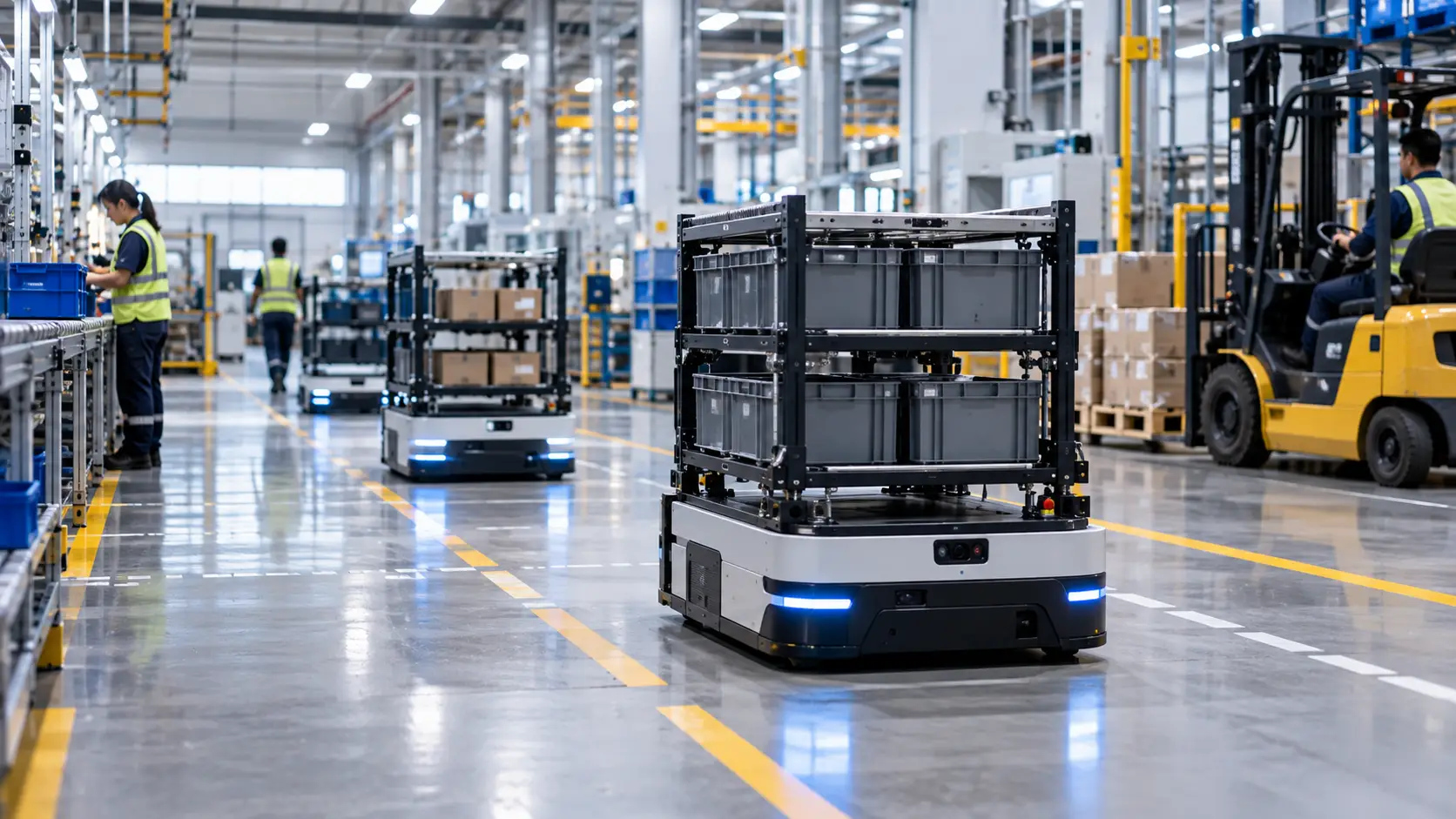

Autonomous mobile robots transporting parts, totes, and supplies through a modern factory alongside employees and forklifts for automated internal logistics

APPLICATION OVERVIEW

Where internal logistics robotics can create operational value.

Map the movement between pickup and delivery points, including traffic, handoffs and return flows. This helps identify where repetitive transport can be separated from tasks that still require human judgment or manipulation.

COMMON WORKFLOWS

How organizations may use internal logistics robotics.

WORKFLOW 01

Point-to-Point Transport

Robots may move carts, totes, bins, or supplies between fixed pickup and drop-off locations.

WORKFLOW 02

Production Replenishment

Autonomous systems may deliver parts or consumables to production areas based on schedules or operational demand.

WORKFLOW 03

Interdepartmental Delivery

Facilities may evaluate robots for moving documents, supplies, tools, or materials between departments.

WORKFLOW 04

Work-in-Progress Movement

Robotics may connect production stages by moving intermediate products to the next workstation or process.

WORKFLOW 05

Return Flows

Systems may also support empty-container returns, reusable packaging, scrap movement, or reverse material flow.

WORKFLOW 06

Multi-Shift Operations

Robotic logistics systems may support repetitive movement across multiple shifts where staffing and consistency are operational concerns.

DEPLOYMENT

The application needs to work inside the real operation.

Internal logistics requires route and traffic planning. Elevators, automatic doors, floor transitions, intersections, mixed pedestrian traffic, pickup interfaces, fleet management, charging, and exception handling can determine whether a deployment scales beyond a demonstration.

Organizations should evaluate the complete operating environment, not just a vendor demonstration. Integration, safety, service availability, maintenance, spare parts, uptime expectations, and total cost of ownership can determine whether a deployment is sustainable.

EMERGING HUMANOID SYSTEMS

Where humanoid systems may fit into this application.

Humanoid robots may eventually participate in internal logistics where materials must be picked up, carried, pushed, pulled, or handed off using human-oriented carts and storage systems. For straightforward transport, autonomous mobile robots may remain more efficient, so organizations should evaluate the simplest platform that meets the workflow.

EVALUATION

Questions to answer before selecting a robotic system.

01

What exact task or operational problem is being addressed?

02

How repetitive, predictable, or variable is the workflow?

03

What payload, reach, mobility, dexterity, sensing, or precision is required?

04

How will the robot interact with employees, equipment, and existing systems?

05

What safety requirements and operating constraints apply?

06

What uptime, cycle time, or service level is actually required?

07

What maintenance, spare parts, software support, and service are available?

08

What is the realistic total cost of ownership?

09

How will exceptions and failures be handled?

10

Can the system scale to additional workflows, shifts, or locations?

ONE ROBOTICS SUPPLY GROUP

Building commercial infrastructure for the robotics economy.

One Robotics Supply Group is developing specialized businesses, relationships, and resources across the commercial robotics ecosystem. Our focus extends beyond individual robotic platforms to the broader infrastructure organizations may need to evaluate, source, deploy, and support robotics over time.

SOURCE

Robotics manufacturers, platforms, equipment, and supplier relationships.

Two professionals discussing a robotics component with humanoid and industrial robots in the background.

EQUIP

Parts, accessories, components, and supporting technologies.

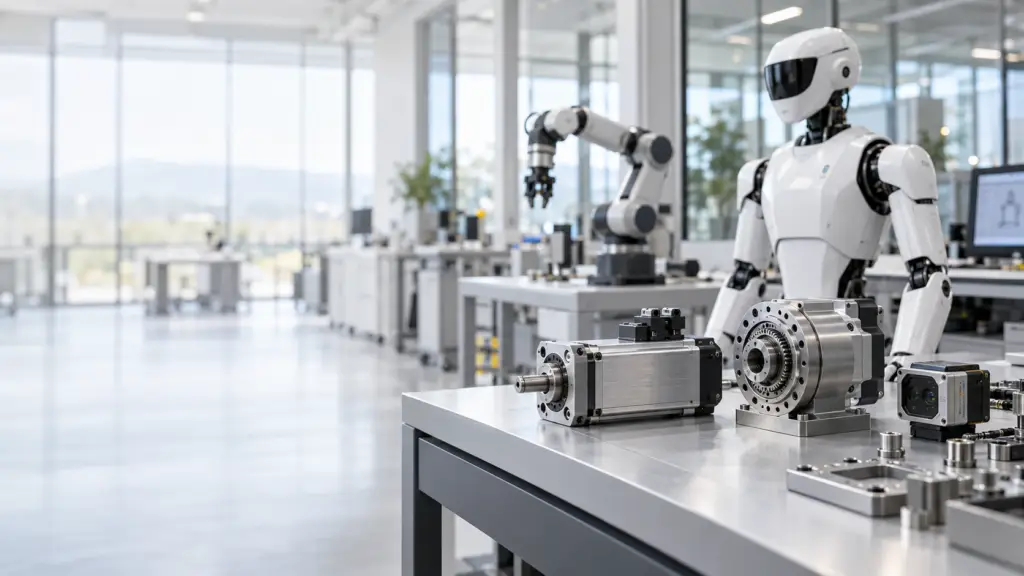
Precision robotics components on a workbench with a humanoid robot and industrial robotic arm in a bright facility.

DEPLOY

Integration relationships, deployment planning, and operational considerations.

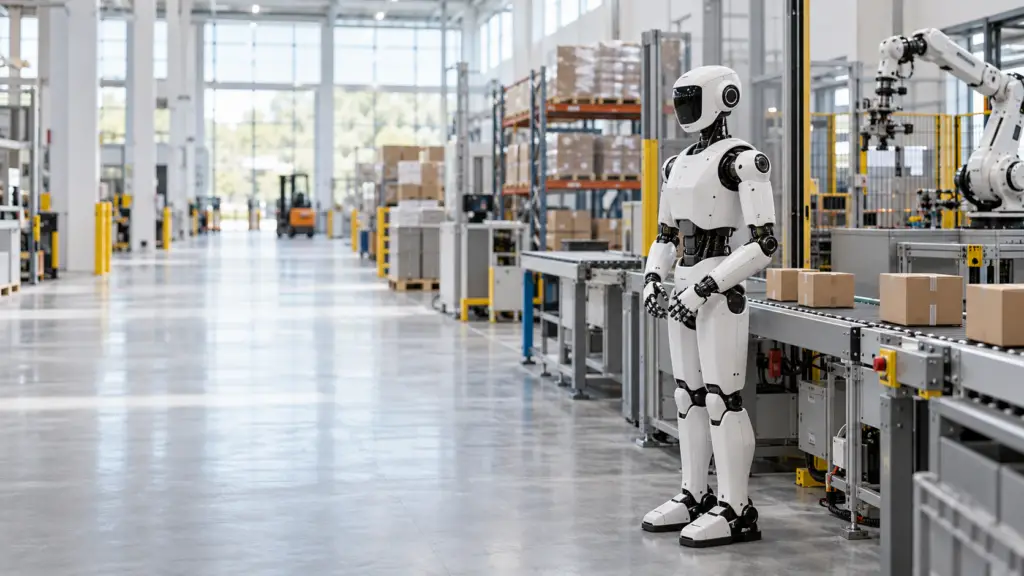
Humanoid robot beside a conveyor with packaged goods and an industrial robotic arm in a bright warehouse.

UNDERSTAND

Research, market intelligence, and emerging industry developments.

Humanoid robot beside a precision actuator and laptop in a bright robotics showroom.
Explore What We Do

START A CONVERSATION

Evaluating internal logistics robotics for your operation?

Whether you are defining a workflow, researching available systems, comparing robotics platforms, exploring sourcing opportunities, or planning a future deployment, One Robotics Supply Group welcomes conversations with organizations preparing for commercial robotics adoption.