One Robotics Supply Group

INDUSTRIES / HEALTHCARE

Robotics for Healthcare

Healthcare robotics can support the operational work that surrounds patient care, including internal delivery, facility logistics, supply movement, and selected back-of-house automation.

One Robotics Supply Group is building relationships and commercial infrastructure across the robotics ecosystem to help organizations evaluate, source, deploy, and support emerging robotic technologies.
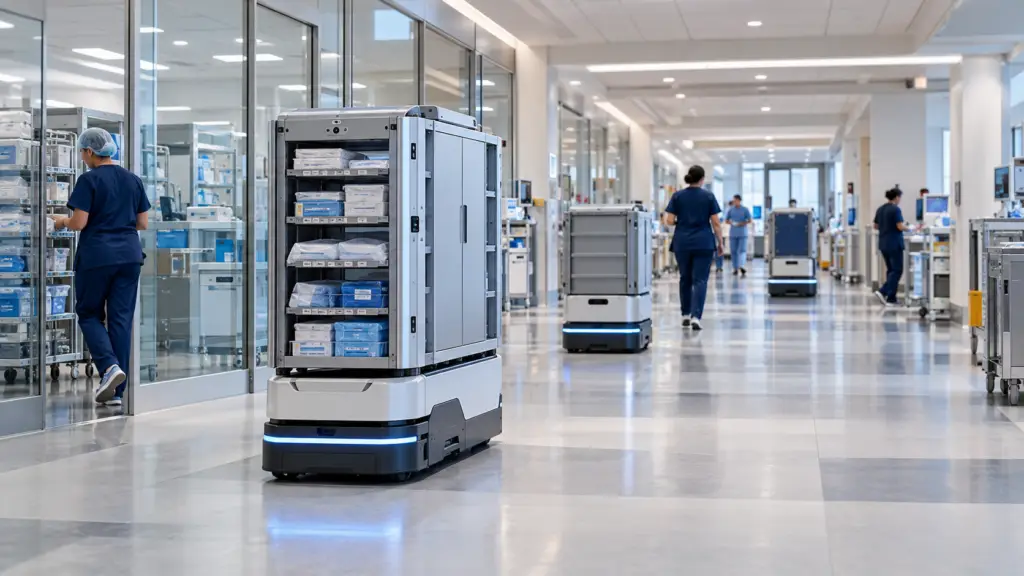

Autonomous hospital logistics robots transporting medical supplies through a modern healthcare facility alongside clinical staff

HEALTHCARE ROBOTICS

Healthcare robotics can support the operational work surrounding patient care.

Healthcare organizations operate complex facilities where medications, supplies, linens, meals, waste, equipment, specimens, and information move continuously between departments.

Robotic systems may support internal logistics, delivery, environmental monitoring, selected disinfection workflows, pharmacy or laboratory automation, and other operational tasks that allow clinical teams to spend less time on repetitive transport or support work.

Healthcare deployments require careful evaluation of safety, infection-control procedures, privacy, navigation around patients and staff, uptime, cleaning, cybersecurity, service response, and integration with facility operations.

HEALTHCARE APPLICATIONS

Where robotics may support healthcare operations.

Internal Delivery

Autonomous mobile robots may transport supplies, linens, meals, medications, specimens, or equipment between departments where appropriate.

Pharmacy & Laboratory Support

Automation may support selected dispensing, storage, transfer, sample, and repetitive handling workflows in controlled areas.

Environmental Monitoring

Mobile systems equipped with sensors may support facility inspection, environmental checks, or documentation in selected areas.

Cleaning & Disinfection Support

Specialized robotic systems may assist with certain floor-cleaning, sanitation, or disinfection workflows under established procedures.

Materials & Equipment Movement

Robotics may help move carts, bins, equipment, and supplies through large healthcare facilities.

Back-of-House Operations

Service robots may support selected logistics and repetitive workflows in kitchens, central supply, laundry, storage, and other nonclinical areas.

THE TECHNOLOGY SHIFT

Healthcare automation is expanding beyond specialized clinical machines.

Healthcare robotics is often associated with highly specialized clinical equipment, but a large share of hospital work occurs outside direct treatment.

Mobile robots and service platforms can automate selected transport and facility tasks across corridors and back-of-house areas without requiring every workflow to be rebuilt around fixed automation.

As mobile manipulation and humanoid systems mature, they may eventually address more flexible support tasks. Healthcare buyers will need particularly strong evidence around safety, hygiene, reliability, privacy, cybersecurity, and the ability to operate around vulnerable people.

COMMERCIAL REQUIREMENTS

Successful robotics adoption requires more than hardware.

01

Sourcing & Procurement

Identify suitable manufacturers, platforms, equipment, and supporting technologies for the specific operating environment and workflow.

02

Parts & Components

Plan for batteries, chargers, accessories, sensors, replacement components, tooling, and other equipment required over the system lifecycle.

03

Integration & Deployment

Evaluate how robotics will interact with facilities, software, people, workflows, controls, and existing equipment.

04

Research & Intelligence

Understand manufacturers, capabilities, market maturity, deployment evidence, and technology development before committing to a platform.

05

Financing & Commercial Models

Evaluate purchasing, leasing, financing, robotics-as-a-service, or other commercial structures where appropriate.

06

Lifecycle Support

Plan for training, maintenance, software updates, spare parts, field service, warranty, and long-term equipment availability.

EMERGING HUMANOID SYSTEMS

Humanoid robots may eventually support nonclinical tasks in human-designed healthcare facilities.

Hospitals, clinics, and care facilities are designed around human-scale doors, elevators, carts, shelving, equipment, and workstations. That environment may create future opportunities for robotic platforms that can move and manipulate within existing spaces.

Potential applications could include supply movement, cart handling, stock replenishment, equipment transport, inspection, and selected back-of-house workflows. Direct clinical care would require much higher evidence, oversight, and regulatory consideration.

Organizations should evaluate safety around patients and staff, cleaning and infection-control compatibility, privacy, navigation reliability, battery strategy, cybersecurity, service response, and clear boundaries around what the system is permitted to do.

Explore Humanoid Robotics

EVALUATING ROBOTICS

Questions healthcare decision-makers should answer before deployment.

01

Which operational task consumes significant staff time without requiring clinical judgment?

02

Will the system operate in patient areas, staff-only areas, back-of-house spaces, or a combination?

03

How will the robot safely navigate around patients, visitors, beds, carts, and emergency activity?

04

What cleaning, disinfection, or infection-control procedures apply to the equipment?

05

What privacy and cybersecurity requirements apply to cameras, sensors, data, and connectivity?

06

What payload, compartment security, cart interface, mobility, or elevator integration is required?

07

What uptime is necessary for the workflow, and what is the manual fallback if the robot is unavailable?

08

How quickly can service or replacement equipment be provided?

09

What systems, access controls, or facility-management platforms must be integrated?

10

How will staff training, workflow ownership, and escalation procedures be handled?

ONE ROBOTICS SUPPLY GROUP

Building commercial infrastructure for the robotics economy.

One Robotics Supply Group is developing specialized businesses, relationships, and resources across the commercial robotics ecosystem.

For healthcare organizations, that means looking beyond an individual robot toward sourcing, supporting technologies, integration relationships, deployment planning, research, and long-term equipment support.

SOURCE

Robotics manufacturers, platforms, equipment, and supplier relationships.

Two professionals discussing a robotics component with humanoid and industrial robots in the background.

EQUIP

Parts, accessories, components, and supporting technologies.

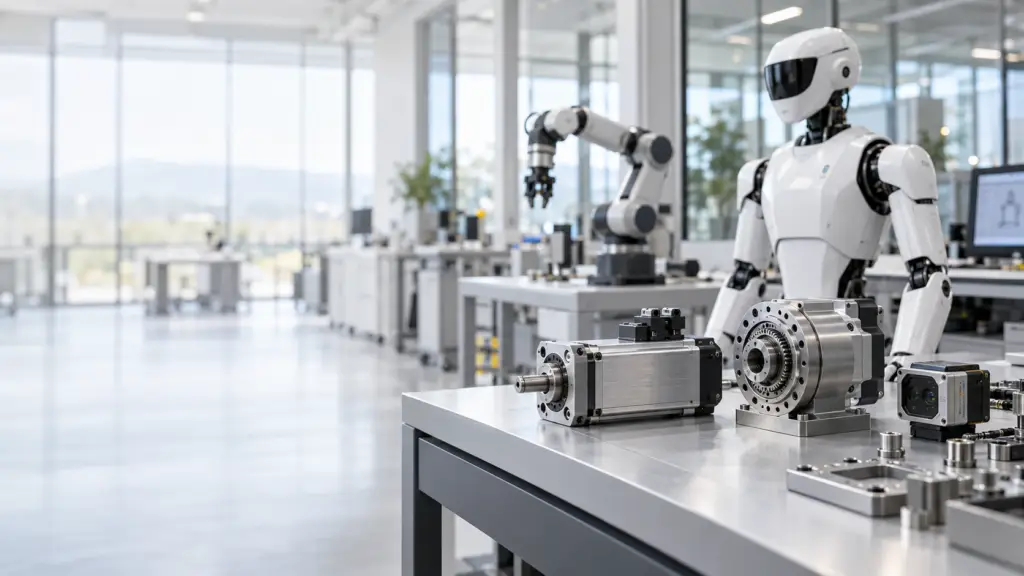
Precision robotics components on a workbench with a humanoid robot and industrial robotic arm in a bright facility.

DEPLOY

Integration relationships, deployment planning, and operational considerations.

Humanoid robot beside a conveyor with packaged goods and an industrial robotic arm in a bright warehouse.

UNDERSTAND

Research, market intelligence, and emerging industry developments.

Humanoid robot beside a precision actuator and laptop in a bright robotics showroom.
Explore What We Do

EXPLORE MORE INDUSTRIES

Robotics across commercial environments.

START A CONVERSATION

Exploring robotics for healthcare operations?

Whether you are evaluating internal delivery, service robotics, facility automation, emerging humanoid systems, or supplier relationships, One Robotics Supply Group welcomes conversations with healthcare organizations and technology partners focused on practical, responsible deployment.