One Robotics Supply Group

HOME / CAPABILITIES / PARTS & COMPONENTS / Robotics Batteries

Robotics Batteries

Robotics batteries provide the stored energy that allows mobile, humanoid and autonomous robots to operate away from fixed power sources. Battery selection affects runtime, mass, charging strategy, thermal behavior, safety and the power available for motors, computing and sensors.

One Robotics Supply Group is developing commercial capabilities to help organizations evaluate battery requirements, sourcing options and power-system considerations for commercial robotic deployments.

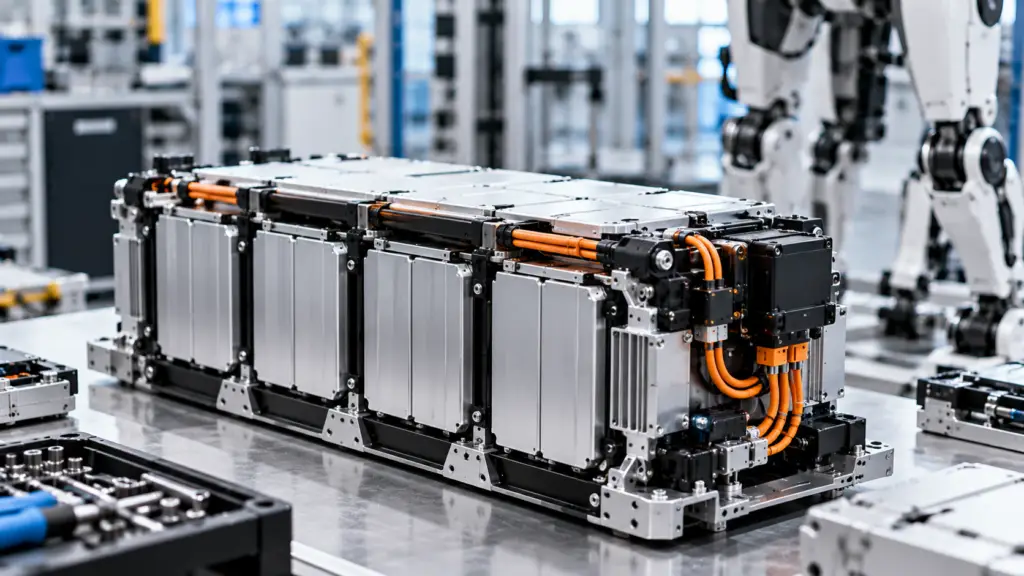
Battery pack and power system for mobile robotics

UNDERSTANDING ROBOTICS POWER

What Are Robotics Batteries?

A robotics battery is an energy-storage system selected and packaged to meet the electrical and mechanical demands of a robot. The battery must supply enough voltage, current and usable energy for motion, computing, sensing and communication while fitting within the platform's weight and volume limits.

For mobile robots, battery design is closely connected to mission profile. A system that moves heavy loads continuously has very different power requirements from a robot that spends long periods idle or performs short intermittent tasks. Realistic runtime planning therefore depends on duty cycle, peak load, average power consumption and charging operations.

BATTERY SYSTEM ARCHITECTURE

Core Elements of a Robot Battery System

Battery cells and modules

Cells store energy and are assembled into modules or packs sized for the required voltage, capacity and physical format.

Battery management system

The BMS monitors cell voltage, temperature and other conditions, helps balance cells and manages protective limits.

Power distribution

Fuses, contactors, converters and distribution hardware route energy safely to motors, computing and auxiliary systems.

Thermal management

Battery temperature affects performance, life and safety. Some applications require active or passive thermal control.

Charging system

Charging architecture affects turnaround time, fleet operations and whether batteries are charged in place, swapped or automatically connected to a charging station.

PRACTICAL EVALUATION

Key Robotics Battery Selection Factors

Energy capacity and runtime

The pack must provide enough usable energy for the expected mission duration and operating reserve.

Power output

Motors can create high peak current demand, so battery power capability must support acceleration, lifting and other transient loads.

Energy density

Higher energy per unit mass or volume can extend runtime without making the robot excessively heavy or large.

Cycle life

Frequent charging and discharging makes lifecycle performance important for commercial fleet economics.

Safety and thermal behavior

Battery chemistry, protection, enclosure design, monitoring and operating temperature all affect safe deployment.

Charging operations

Charge time, connector design, automatic charging and battery swapping can influence fleet availability and labor requirements.

ROBOTICS APPLICATIONS

Where Robotics Batteries Fit in Robotics

Robotics batteries are central to autonomous mobile robots, humanoids, inspection robots, service robots and other platforms that need untethered operation. The power system must support locomotion, manipulation, perception and computing simultaneously, which means runtime can change significantly with payload, speed, terrain and task intensity.

SOURCING & PROCUREMENT

Sourcing and Procurement for Robotics Batteries

Battery sourcing requires careful alignment between electrical specifications, mechanical packaging, safety requirements and expected operating life. Buyers may need to consider chemistry, voltage, capacity, discharge capability, BMS features, certifications, environmental limits, charging equipment, lead times and replacement availability. As its capabilities develop, ORSG welcomes discussions about how it may help organize these commercial and technical requirements as part of the wider robotics component sourcing process.

Discuss Your Requirements

FROM COMPONENT TO SYSTEM

Integration and Lifecycle Considerations

A battery pack must integrate with power distribution, motor drives, computing and charging infrastructure. Teams should validate peak current demand, voltage ranges, state-of-charge reporting, thermal limits, protective behavior and service procedures. For fleets, charging strategy should be designed alongside operations so energy management does not become a bottleneck after deployment.

WHO THIS IS FOR

Who This Page Is For

This page is intended for robot manufacturers, OEMs, systems integrators, engineering organizations, industrial automation teams, procurement professionals and companies evaluating or deploying advanced robotic systems.

FREQUENTLY ASKED QUESTIONS

Frequently Asked Questions About Robotics Batteries

What batteries are used in robots?

Many mobile robots use rechargeable battery packs selected for the required voltage, energy, power, weight, lifecycle and safety characteristics. The exact chemistry and configuration depend on the platform.

How is robot battery runtime calculated?

Runtime depends on usable battery energy and the robot's average power consumption, which changes with payload, movement, computing load, environment and duty cycle.

Why is energy density important for humanoid robots?

Humanoid robots must carry their own batteries, so battery mass directly affects the load on joints and the energy required for locomotion.

What does a battery management system do?

A BMS monitors and protects the battery pack, typically tracking conditions such as cell voltage and temperature while managing operational limits and balancing.

What should buyers consider when sourcing robotics batteries?

Important factors include voltage, capacity, peak current, energy density, cycle life, thermal behavior, BMS functionality, charging strategy and replacement availability.

Can ORSG support robotics battery sourcing?

As its capabilities develop, ORSG welcomes discussions about how it may support organizations evaluating robotics power components by helping structure requirements, assess commercial options and connect battery selection with the broader deployment architecture.

START A CONVERSATION

Planning Power and Battery Requirements for Robotics?

Share your technical, sourcing and deployment requirements. One Robotics Supply Group welcomes conversations as we develop commercial relationships and capabilities across the robotics ecosystem.