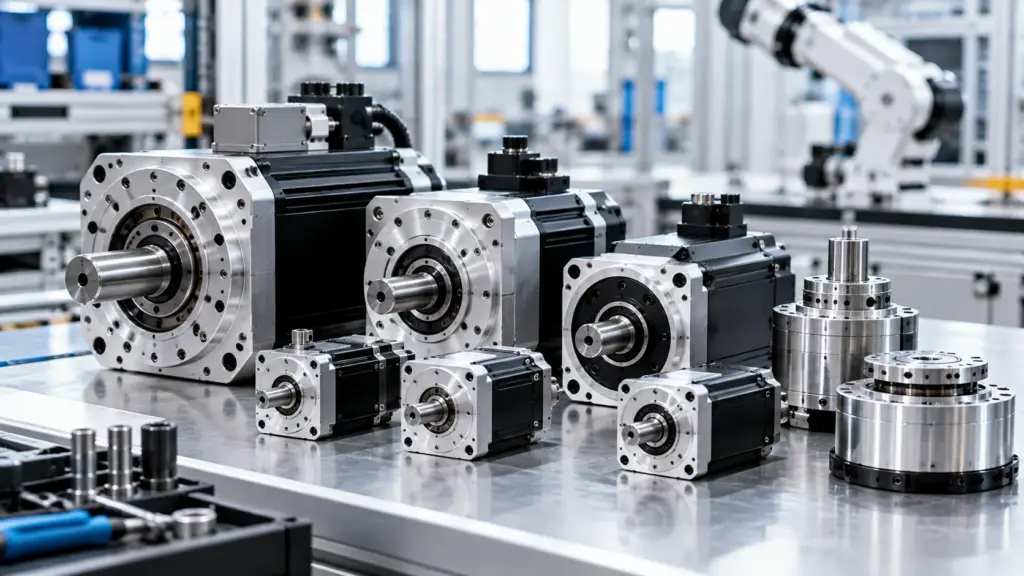
What motors are used in robotics?
Robots commonly use brushless motors, servo motor systems, direct-drive motors, geared motor systems and other specialized electric motors depending on the motion requirement.
How do you choose a motor for a robot?
Selection typically starts with torque, speed, duty cycle, efficiency, size, mass, voltage, thermal limits, feedback and transmission requirements.
What is the difference between a motor and an actuator?
A motor converts electrical energy into rotational motion. An actuator is the broader mechanism that produces controlled motion and may include a motor, gearbox, screw, sensors and other components.
Why is torque density important in robotics?
High torque density can provide more useful output from a smaller and lighter package, which is valuable in robot joints and mobile systems.
Why does motor efficiency matter in mobile robots?
Efficient motors reduce wasted energy and heat, helping extend battery runtime and reduce cooling requirements.
Can ORSG support robotics motor sourcing?
As its capabilities develop, ORSG welcomes discussions about how it may support component sourcing by helping organizations define motion requirements, evaluate commercial options and connect motor selection with integration and deployment needs.